Eczema Triggers and Management: A Comprehensive Guide to Restoring Skin Health

What if the secret to calming your skin has nothing to do with the latest cream sitting in your bathroom cabinet? It is incredibly draining to wake up at 3 am from an unbearable itch, only to face the day with the weight of social anxiety over your skin's appearance. You likely feel trapped in a cycle of temporary relief, where symptoms are masked but the underlying cause is ignored. This frustration is common, especially when conflicting advice leaves you more confused than when you started. True eczema triggers and management requires a shift in perspective, moving from surface-level fixes to a deeper, restorative understanding of your body's internal equilibrium.
In this guide, we will help you identify the specific environmental and biological factors that spark your flare-ups. We will explore the latest evidence-based options, including the 2025 funding updates for targeted therapies in New Zealand, and the vital connection between your gut and skin health. This is a journey of discovery, designed to help you reduce reliance on short-term solutions and achieve the long-term skin calm and confidence you deserve.
Key Takeaways
- Understand the science of the skin barrier and the role of filaggrin in keeping your skin hydrated and protected.
- Identify your personal eczema triggers and management techniques that address the root causes of systemic inflammation.
- Discover the gut-skin axis and how internal equilibrium reflects on the surface of your skin.
- Learn the 'Soak and Seal' method to maximise moisture absorption and help your skin find its natural balance.
- Explore how virtual Eczema Treatment Plans provide a convenient, expert-led path toward long-term remission and confidence.
What is Eczema? Understanding the Compromised Skin Barrier
Eczema, specifically atopic dermatitis, is often oversimplified as just having dry skin. In reality, it is a chronic inflammatory condition where the immune system is in a state of overdrive. While the symptoms appear on the surface, the root of the problem is a systemic dysregulation. Understanding the nuances of eczema triggers and management starts with recognising that your skin isn't just "dry"; its fundamental protective architecture is compromised. It's a complex internal dialogue that happens to be visible on your cutaneous layer.
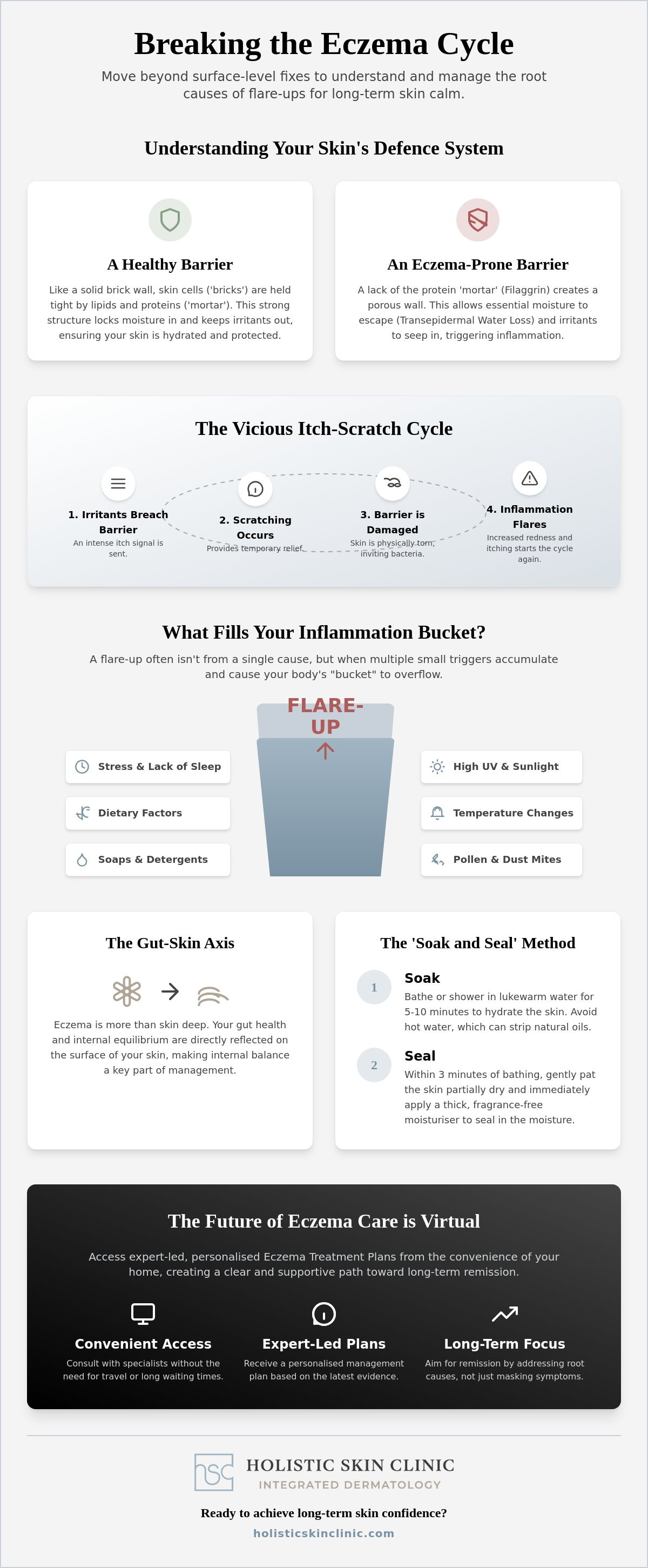
At the heart of this architecture is a protein called filaggrin. Think of filaggrin as the genetic "glue" that keeps your skin cells tightly packed and watertight. When your body doesn't produce enough of this protein, the skin barrier becomes porous. This structural flaw allows essential moisture to escape and environmental irritants to seep in, triggering the inflammatory response we recognise as a flare-up. Without this protein, your skin lacks the resilience it needs to defend itself against the outside world.
This structural weakness leads directly to the "itch-scratch cycle". When the barrier is breached, the immune system sends out distress signals that manifest as an intense, often unbearable itch. Scratching provides momentary relief but physically tears the skin, further damaging the protective layer and inviting bacteria to colonise the area. It is a self-perpetuating loop that requires a strategic, compassionate approach to break effectively.
The Seven Faces of Eczema
Not all eczema looks or behaves the same way. While atopic dermatitis is the most common form, often linked to hay fever or asthma, other types like contact dermatitis (triggered by specific substances) or dyshidrotic eczema (causing tiny blisters on hands and feet) require different interventions. Identifying your specific type is the vital first step in creating a personalised management plan. In many adults, these types can overlap, making a professional diagnosis essential to avoid the frustration of using the wrong treatments for your unique skin profile.
Why the Skin Barrier Fails
To visualise the skin barrier, imagine a wall made of bricks and mortar. The "bricks" are your skin cells, and the "mortar" is a rich blend of lipids and proteins. In healthy skin, this wall is impenetrable. In an eczema-prone barrier, the mortar is thin or missing, leaving the wall porous and unstable. This instability leads to a process known as transepidermal water loss (TEWL), which is the measurement of how much water evaporates from the skin's surface into the atmosphere. High levels of TEWL mean your skin is constantly losing its internal hydration, which directly increases itch intensity. Effective eczema triggers and management must focus on restoring this "mortar" to prevent the inflammatory cycle from restarting.
Common Eczema Triggers: Deciphering Your Skin’s Flare-up Language
Your skin is constantly communicating its needs and reactions. Learning to interpret this "skin language" is the cornerstone of effective eczema triggers and management. It's a highly individual process. While one person might flare up after using a specific laundry powder, another might find their skin remains calm until the pollen count rises. Understanding these catalysts requires moving beyond generic lists to look at your specific biological and environmental context.
A helpful way to visualise this is the "Bucket Theory" of inflammation. Imagine your body is a bucket. Small triggers, like a dusty room or a stressful morning, add a little "water" to the bucket. On their own, they don't cause a flare. However, when you add a change in season or a sleepless night, the bucket overflows. This overflow is the visible flare-up. Tracking these cumulative factors through a skin diary is often the most transformative step you can take. By recording your environment, diet, and stress levels alongside your skin’s condition, patterns begin to emerge from the chaos.
Environmental and Seasonal Irritants
In New Zealand, our environment presents unique challenges. The high UV levels and intense sunlight can strip moisture from already vulnerable skin, while the shift from damp winters to dry summers forces the barrier to constantly recalibrate. Inside the home, Eczema is frequently aggravated by harsh detergents and fragranced soaps that dissolve the skin's natural oils. Even temperature fluctuations, such as moving from a centrally heated office into the biting outdoor air, can shock the skin, leading to increased transepidermal water loss and irritation.
Internal and Emotional Triggers
The "Stress-Skin Connection" is not just a theory; it's a physiological reality. When you experience stress, your body releases cortisol, a hormone that can disrupt the skin's ability to retain water and trigger inflammatory pathways. Hormonal shifts, particularly in adults, also play a significant role in skin sensitivity. Additionally, while sweat is a common trigger due to its salt content and heat, it's vital to find ways to keep moving. Exercise is essential for your total well-being, so the goal is to manage the post-workout routine rather than avoiding activity altogether. If you're feeling overwhelmed by these variables, a tailored Eczema Treatment Plan can provide the structure and professional guidance needed to regain control.
The Gut-Skin Axis: Why Eczema is More Than a Surface Issue
Your skin is not an island. It functions as the external boundary of a much larger, interconnected system where the health of your digestive tract plays a starring role. Scientists call this the "gut-skin axis," a sophisticated communication network where your internal environment directly influences your cutaneous health. When we discuss a comprehensive approach to eczema triggers and management, we must look beneath the surface to see how your internal ecosystem is performing. If your gut is in a state of distress, your skin will often be the first to tell the story.
A primary driver of this connection is intestinal permeability, commonly known as "leaky gut." When the delicate lining of your digestive tract becomes compromised, it allows undigested food particles and toxins to slip into the bloodstream. This breach puts your immune system on high alert, causing systemic inflammation that eventually manifests as red, itchy patches on your arms, legs, or face. Your microbiome acts as a training ground for your immune cells, teaching them whether to react with aggression or remain in a state of calm. While diet is a vital pillar of this process, it's rarely the only factor; true healing requires balancing your internal biology alongside your external environment.
Inflammation and the Immune Response
The heat and intense redness of an eczema flare are clear signals of a hyper-reactive immune system. This internal fire doesn't just happen by accident; it's the result of your body trying to defend itself against perceived threats. Because this response is systemic, effective long term skin health plans must prioritise cooling this internal inflammation. It's also important to distinguish between a food allergy, which causes an immediate and potentially dangerous reaction, and a food sensitivity. Sensitivities are often delayed, making them harder to spot without professional guidance, yet they play a significant role in the daily comfort of your skin.
Nurturing Your Internal Ecosystem
Restoring your skin's vitality often begins with what you put on your plate. A diverse intake of plant-based fibre and fermented foods helps cultivate a robust microbiome, which in turn sends "calm" signals to your skin. We encourage you to look "beyond the cream" to understand the physiological drivers of your symptoms. This holistic perspective shifts the focus from merely hiding a problem to actively building health from the inside out. One-size-fits-all elimination diets often fail because they ignore the unique nutritional needs of the individual and can lead to deficiencies that actually slow down the skin's natural repair process. A personalised strategy for eczema triggers and management ensures your body has the specific nutrients it needs to thrive.
Comprehensive Management Strategies: Moving Toward Remission
Achieving long-term relief requires a fundamental shift in mindset. Instead of searching for an elusive "cure", our goal is to guide you toward sustained remission. This state of skin health is characterised by long periods of calm and a significant reduction in the frequency and intensity of flare-ups. Successful eczema triggers and management isn't about trial and error with the latest viral products. It relies on a structured, evidence-based programme that respects your skin's unique biology and provides a clear map for improvement.
The "Soak and Seal" method is a cornerstone of this restorative approach. It involves taking a lukewarm bath or shower for approximately ten minutes to saturate the skin cells with hydration. Immediately after patting the skin dry with a soft towel, you must apply a thick emollient to lock that moisture in. This simple but precise ritual ensures maximum absorption and strengthens the barrier against external irritants. While topical therapies are sometimes necessary to calm acute flares, they should be viewed as a temporary bridge toward a more permanent state of balance.
Restoring the Barrier from the Outside In
Choosing the right emollient is a balance between efficacy and lifestyle. Ointments have the highest oil content and are superior for repairing a severely compromised barrier; however, they can feel heavy on the skin. Creams are a lighter alternative for daytime use, while lotions are often too watery to provide the protection required for chronic eczema. Regardless of the product choice, soap-free cleansing is non-negotiable. Traditional soaps strip away the very lipids your skin is struggling to produce. Remember that the consistency of your routine matters far more than the price tag of any single bottle.
Lifestyle Adjustments for Daily Relief
Small changes in your daily environment can yield significant results for your physical comfort. To manage the dreaded "night-time itch", try wearing cotton gloves to prevent sleep-scratching and keep your bedroom temperature cool to avoid overheating. Reducing the allergen load in your home by using dust-mite covers and high-quality vacuum filters also provides a much-needed reprieve for your immune system. Since stress is a known catalyst for cortisol-driven flares, incorporating mindfulness or gentle breathing exercises into your day can help maintain your internal equilibrium. If you are ready to stop the guesswork and start a professional journey, our Eczema Treatment Plans offer the clear, expert-led map you need to reclaim your skin health.
The Future of Care: Virtual Eczema Management Plans in New Zealand
The landscape of healthcare is shifting, and for those living with chronic skin conditions, this evolution brings a new sense of hope. In New Zealand, teledermatology is revolutionising how patients access specialist support, breaking down the geographical and logistical barriers that often stand between a sufferer and relief. By choosing a virtual skin consultation nz, you can engage in a deeper, more focused dialogue about your history from the comfort of your own home. This familiar environment often leads to a more relaxed and thorough conversation, allowing us to uncover the subtle nuances of your condition that might be missed in a sterile clinical setting.
Virtual care isn't just about convenience; it's about the quality and frequency of the connection. Without the stress of travel or the rush of a waiting room, you can focus entirely on the collaborative process of eczema triggers and management. This modern model allows for more consistent follow-ups, ensuring that your progress is monitored closely and your plan is adjusted as your skin begins its restorative journey. At Holistic Skin Clinic, we position ourselves as your dedicated partner, providing the steady hand and expert knowledge needed to navigate the complexities of chronic inflammation.
What a Personalised Management Plan Includes
Generic advice often leads to generic results. A truly effective plan moves beyond the basic suggestion to "use more moisturiser" and instead addresses your specific environmental and biological triggers. We look at your lifestyle, your work environment, and your internal health to build a strategy tailored to you, not just to a general diagnosis. This is a collaborative process where we work with you to refine your eczema triggers and management strategy as your skin heals. Expert oversight is crucial during this progression, as it helps you avoid the common pitfalls of self-treatment and ensures you're using the right interventions at the right time.
Taking the First Step Toward Calm Skin
It is a common misconception that you must "just live with" the discomfort and social anxiety of chronic flares. There is immense emotional relief in finally having a clear, structured roadmap for your skin health. You deserve to feel confident in your appearance and comfortable in your daily life. We invite you to begin this transformative path by booking an Online Consult today. Let’s move away from the frustration of temporary fixes and toward a future of lasting skin calm, balance, and vitality.
Embracing a Future of Calmer, More Resilient Skin
Restoring your skin health is a journey that moves from the surface deep into your internal ecosystem. By understanding the science of your skin barrier and the vital role of the gut-skin axis, you've already taken the first step toward breaking the itch-scratch cycle. Identifying your unique environmental and biological catalysts allows you to move beyond temporary fixes. Effective eczema triggers and management requires this 360-degree view, combining precise topical care with internal support to achieve lasting results.
You don't have to navigate this complex path alone. Our specialist virtual clinical approach provides you with evidence-based management plans designed for long-term skin health and remission. This structured roadmap replaces confusion with clarity, helping you regain the personal confidence you deserve. Book Your Personalised Online Eczema Consultation Today to begin your collaborative journey toward balance. Your skin has an incredible capacity to heal; it just needs the right environment and expert guidance to find its way back to vitality.
Frequently Asked Questions
Can eczema be cured permanently?
Eczema is currently recognised as a chronic condition, which means there isn't a permanent cure that alters your genetic makeup. However, achieving long-term remission is a very realistic and attainable goal. By focusing on eczema triggers and management, you can calm your immune response and strengthen the skin barrier to a point where flares become rare. The objective is to move from a state of constant irritation to one of lasting skin health and personal confidence.
Is there a specific diet that clears eczema for everyone?
There is no single "eczema diet" because every person’s internal ecosystem and sensitivities are unique. While some individuals find relief by reducing common inflammatory foods, others may react to specific high-histamine ingredients or environmental cross-reactants. We look closely at the gut-skin axis to identify what supports your specific microbiome. A diverse, nutrient-dense diet is helpful for most, but a personalised plan is essential to avoid the frustration of unnecessary and restrictive elimination diets.
How do I know if my eczema is caused by an allergy?
Determining an allergic cause involves distinguishing between immediate immune reactions and delayed sensitivities. If your skin flares instantly after contact with a specific substance, an allergy is likely. However, most eczema is driven by a combination of genetic barrier weaknesses and cumulative environmental irritants. Keeping a detailed skin diary is the best way to track these patterns. Professional assessment can help confirm if true IgE-mediated allergies are contributing to your symptoms or if your barrier is simply overwhelmed.
Are steroid creams safe for long-term eczema management?
Topical corticosteroids are effective tools for calming acute, "angry" flares, but they aren't designed for indefinite use. Prolonged or incorrect application can lead to skin thinning and other complications. Our approach uses these treatments as a temporary bridge to provide relief while we work on the deeper causes of inflammation. The goal is to restore your skin's natural resilience so that your reliance on medicated creams reduces over time as your barrier becomes more self-sustaining.
Can stress really cause my skin to flare up?
Yes, the connection between your emotional state and your skin is a documented physiological reality. When you're stressed, your body releases cortisol, a hormone that can weaken the skin's barrier and trigger inflammatory pathways. This often acts as the final catalyst that causes your "inflammatory bucket" to overflow. Incorporating stress management into your eczema triggers and management strategy is vital for maintaining internal equilibrium and preventing cortisol-driven flares during challenging times.
What is the best way to stop the 'itch-scratch cycle' at night?
Breaking the nocturnal itch starts with the "Soak and Seal" method immediately before bed to lock in essential moisture. It's also important to keep your bedroom temperature cool and use 100% cotton bedding to prevent the overheating that often triggers itching. For those who scratch in their sleep, wearing soft cotton gloves can provide a physical barrier to protect the skin. These practical adjustments, combined with a calming evening routine, help your nervous system settle and allow your skin to repair.
How does an online skin consultation work for eczema?
Our Online Consults are conducted via a secure video platform, allowing you to discuss your skin history from a comfortable, private environment. Before we meet, you'll provide clear photos and details of your current routine for a thorough assessment. We then spend time uncovering your specific triggers and lifestyle factors. This collaborative session results in a bespoke Eczema Treatment Plan, giving you a clear, evidence-based map to follow as you move toward restorative skin health.
Is eczema contagious or hereditary?
Eczema is not contagious; you cannot catch it from someone else or pass it on through physical contact. It does, however, have a strong hereditary component. If your family has a history of eczema, asthma, or hay fever, your genetics may predispose you to a more porous skin barrier. Understanding this genetic link is helpful because it shifts the focus toward supporting your skin's natural architecture and managing your environment to prevent your immune system from becoming hyper-reactive.