The Gut-Skin Axis: Exploring the Gut Health and Eczema Connection
What if the most effective way to soothe your inflamed skin isn't found in a tube of cream, but deep within your digestive system? It's incredibly disheartening to spend your hard-earned money on "miracle" balms only to wake up to another flare-up, especially when over 230 million people globally are facing this same exhausting cycle. We understand the frustration of conflicting diet advice and the heavy emotional toll that chronic inflammation takes on your confidence. It's time to stop guessing and start understanding the clinical gut health and eczema connection.
You deserve a management plan that looks beyond the surface to find a restorative path toward lasting relief and vitality. In this guide, we'll explore the science of the gut-skin axis, including recent 2026 research that highlights how microbiome changes can impact skin health as early as six months of age. We'll provide you with evidence-based dietary guidance and a professional framework to manage eczema from the inside out; this approach moves you from a state of physical distress toward a sense of natural equilibrium.
Key Takeaways
- Understand the gut-skin axis as a bidirectional communication system where your internal health directly reflects on your skin's surface.
- Discover why the gut health and eczema connection is a key clinical pathway for reducing systemic inflammation and supporting barrier function.
- Learn to distinguish between "miracle" detox myths and science-backed strategies like increasing dietary fibre and fermented foods.
- Find out how a professional management plan integrates internal gut support with external dermatological care for a 360-degree approach.
- Recognise the importance of a personalised assessment to uncover your unique triggers and move toward long-term skin vitality.
Understanding the Gut-Skin Axis: Why Your Digestion Matters
For many years, clinical dermatology treated eczema primarily as a surface-level barrier defect, focusing almost exclusively on topical moisturisers and steroid creams. While protecting the skin's outer layer remains vital, modern science now recognises that your skin often acts as a mirror for your internal health. This relationship is governed by the gut-skin axis, a complex bidirectional communication network that links your digestive system directly to your skin's immune response. Understanding the gut health and eczema connection is the first step toward moving beyond temporary fixes and finding a restorative path to long-term balance.
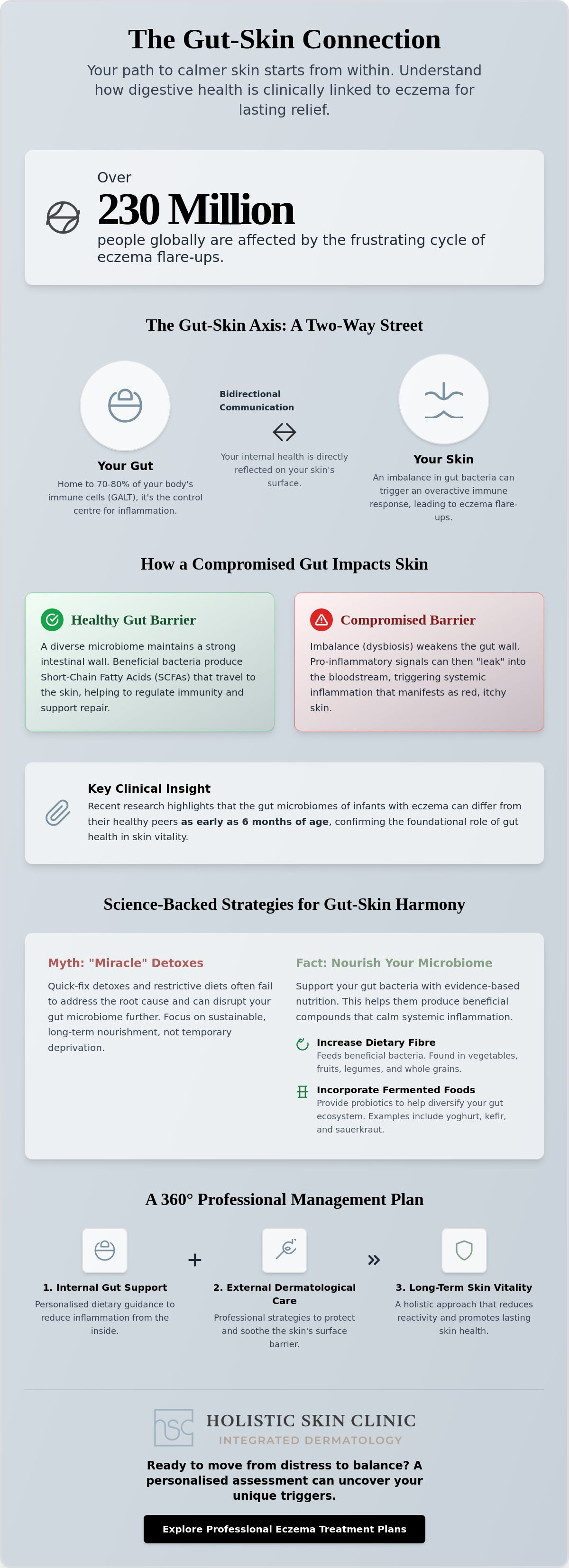
At the heart of this connection is the Gut-Associated Lymphoid Tissue, or GALT, which houses approximately 70 to 80 per cent of your body's immune cells. Think of the GALT as a training ground where your immune system learns to distinguish between friend and foe. When your gut is in a state of equilibrium, these immune cells remain calm and supportive. However, if the intestinal barrier becomes compromised, a condition clinicians describe as increased intestinal permeability, pro-inflammatory signals can escape into the bloodstream. This process is central to the experience of chronic atopic dermatitis, as the body's internal alarm system is constantly being triggered by an imbalanced human microbiome.
How the Gut Communicates with Your Skin
Your gut bacteria produce essential metabolites, such as short-chain fatty acids, that travel through your circulatory system to reach the skin's deeper layers. These molecules help regulate the skin's own microbiome and support its natural ability to repair itself. When gut dysbiosis occurs, meaning an imbalance of beneficial versus opportunistic bacteria, the transport of these protective signals is disrupted. This imbalance often triggers an overactive immune response that manifests as red, itchy, or weeping patches on the surface. The gut-skin axis is a regulatory pathway for systemic homeostasis.
The Role of Systemic Inflammation
It's common to blame a sudden flare-up on a new laundry liquid or a change in the weather. While these local triggers are certainly real, they often act as the "final straw" for a system already burdened by low-grade systemic inflammation. If your gut is in a state of distress, your entire body remains on high alert. This explains why a period of poor digestion or high stress can lead to a sudden eczema eruption on your face or elbows days later. By addressing the gut health and eczema connection, we can work to lower this baseline inflammation. This comprehensive approach makes your skin far less reactive to external environmental factors, leading to the emotional relief of clearer, calmer skin.
The Science of the Microbiome: Gut Bacteria and Skin Health
Your gut is home to a vast ecosystem of trillions of microorganisms, a community that acts as a vital organ for your immune health. This internal environment thrives on diversity; the more varied your microbial inhabitants, the more resilient your skin barrier becomes. A study published in June 2026 in Frontiers in Microbiomes highlighted that the gut microbiomes of infants with eczema begin to differ from healthy peers as early as 6 months of age. This research confirms that the gut health and eczema connection is a foundational biological reality that persists into adulthood, where a lack of microbial variety often translates to heightened skin sensitivity.
When this diversity is lost, the skin loses its internal support system. Specific bacterial strains are responsible for maintaining the "tight junctions" of your intestinal wall, preventing inflammatory triggers from entering your system. If you're feeling overwhelmed by conflicting advice or "miracle" supplements, our Eczema Treatment Plans provide a structured, evidence-based map to help you find your way back to balance. By focusing on the specific strains that support skin integrity, we move beyond surface-level symptoms to address the deeper biological causes of your distress.
Short-Chain Fatty Acids: The Skin’s Internal Allies
Short-chain fatty acids (SCFAs), particularly butyrate and propionate, are the silent workers of your digestive tract. These metabolites are produced when your gut bacteria ferment dietary fibre, and they play a crucial role in regulating the immune system. SCFAs help to dampen the overactive T-cell response that leads to the classic red, itchy patches of atopic dermatitis. Beyond reducing inflammation, these gut-derived molecules have been linked to improved skin wound healing, helping your body repair the damage caused by chronic scratching and irritation.
Microbial Dysbiosis and Eczema Flares
Dysbiosis is more than just a lack of "good" bacteria; it's a state of ecological imbalance where opportunistic species begin to dominate. This shift often compromises the skin barrier from the inside out, making it harder for your skin to retain moisture and keep out irritants. In a modern context, the "hygiene hypothesis" suggests that our over-sanitised environments and Western diets have reduced our exposure to beneficial microbes. For an adult with eczema, this means that supporting the gut health and eczema connection requires a deliberate effort to reintroduce microbial variety through both diet and targeted, professional management.
A meta-analysis published in January 2026 found that specific probiotic interventions significantly decreased the SCORing Atopic Dermatitis (SCORAD) index in patients after only two months of treatment. This data demonstrates that while eczema is a complex, multifactorial condition, optimistic results are possible when we prioritise the health of our internal microbiome. It's about creating a restorative environment where your skin can finally find the peace it deserves.
Separating Fact from Fiction: Can You "Heal" Your Gut to Clear Eczema?
It's tempting to search for a single "root cause" when your skin feels like it's in a state of constant rebellion. You've likely heard that "healing your gut" is the definitive answer to chronic eczema, but the reality is more nuanced. While the gut health and eczema connection is a powerful clinical pathway, it's just one piece of a larger biological puzzle. Eczema is multifactorial; it's influenced by genetics, environment, and your skin's own barrier function. Thinking of gut health as a miracle cure can lead to the same cycle of frustration you've experienced before. We prefer to view it as a supportive strategy that works in harmony with other treatments.
Another common myth you might encounter is the idea of "skin purging." Some wellness circles suggest that a flare-up is just your body "releasing toxins" as you clean up your diet. In clinical terms, this simply isn't how the human body works. Your liver and kidneys are your primary detoxification organs, and they don't use your skin as a secondary exhaust pipe for waste. If your skin is red, weeping, or inflamed, it's a sign of an active immune response, not a healthy "purge." Recognising this helps you move away from harmful narratives and toward a structured, professional management plan that respects your body's physiology.
The Myth of the Single Root Cause
We often see clients who feel they've "failed" because a specific diet didn't clear their skin. It's vital to remember that many people with eczema have a genetic predisposition, such as a mutation in the filaggrin gene, which affects the skin's ability to retain moisture. A holistic approach means we don't just look at your digestion; we look at the 360-degree picture of your health. Gut health is a significant lever you can pull to lower systemic inflammation, but it's not the entire machine. By addressing both the internal immune triggers and the external barrier defects, we create a more resilient path toward skin vitality.
The Danger of Unsupervised Elimination Diets
One of the most concerning trends in the wellness space is the use of highly restrictive elimination diets without professional guidance. Cutting out entire food groups like dairy, gluten, or nightshades can lead to significant nutritional deficiencies that actually hinder skin repair. The psychological stress of managing such a rigid diet often triggers a cortisol spike, which can worsen inflammation. Instead of focusing on what to cut out, we advocate for "crowding in" a diverse range of plant-based foods. This supports your microbiome and strengthens the gut health and eczema connection without the emotional and physical toll of deprivation.
Practical Strategies for Gut-Skin Harmony
Moving from theory into practice requires a gentle, methodical approach. While we've explored the scientific weight of the gut health and eczema connection, the path toward relief often begins with simple, daily choices that nurture your internal ecosystem. It's about creating a restorative environment where your body can thrive, rather than fighting against it with restrictive rules. This progression from distress to balance is a collaborative process between your lifestyle and your biology.
Consistency always triumphs over perfection. You don't need to overhaul your entire life in a single day to see a difference in your skin's resilience. Small, intentional shifts in how you eat, move, and rest can lower your baseline inflammation over time. If you're ready to move toward a more balanced state with a plan tailored to your unique needs, our Online Consults provide the specialist-led guidance you need to begin your journey toward skin vitality.
Feeding Your Microbiome for Better Skin
To support the production of those vital short-chain fatty acids discussed earlier, you must provide your bacteria with the right fuel. Prebiotics are non-digestible fibres that act as specialised fertilisers for your beneficial microbes. Including a variety of these foods helps maintain a robust internal barrier.
- Garlic and onions: Rich in inulin to support the growth of beneficial Bifidobacteria.
- Oats: High in beta-glucans, which help regulate immune system responses.
- Bananas: A gentle, accessible source of resistant starch for gut health.
Aim for the "30 plants a week" challenge to ensure maximum microbial diversity. This count includes nuts, seeds, herbs, and whole grains, not just vegetables. Additionally, incorporating Omega-3 fatty acids from sources like flaxseeds, walnuts, or oily fish helps dampen the systemic inflammation that drives chronic eczema flares.
Lifestyle Factors: Beyond What You Eat
Skin health is a 360-degree journey that extends far beyond the dinner plate. Sleep deprivation is a frequent trigger for increased gut permeability, which can lead to a sudden morning flare-up. Aim for a consistent sleep rhythm to allow your skin's barrier and your digestive tract to repair themselves overnight. Gentle movement, such as walking or yoga, supports healthy gut motility and helps manage the emotional toll that chronic skin conditions often take.
Mindful eating is another powerful tool in your restorative kit. By slowing down and chewing thoroughly, you improve the breakdown of nutrients and reduce the stress response in your digestive system. This brain-gut-skin connection is vital. When your mind is calm, your gut is more likely to remain in equilibrium, leaving your skin far less reactive to the world around you.
Integrating Gut Health into a Professional Management Plan
Navigating the complexities of chronic skin inflammation can feel like a lonely journey. You've likely spent countless hours researching the gut health and eczema connection, perhaps trying various supplements or restrictive diets without a clear map to follow. It's exhausting to manage these intricate layers of health on your own. Transitioning from a trial-and-error approach to a professional management plan offers more than just clinical results; it provides the emotional relief of knowing you're finally on a structured path toward vitality. We don't just see a skin condition to be managed; we see a transformative path toward personal confidence.
A professional approach balances clinical authority with nurturing warmth, ensuring you feel heard and supported throughout your recovery. Our methodology focuses on the dual layers of your health, contrasting the external skin barrier with internal immune triggers to create a sense of comprehensive, 360-degree care. By moving away from "miracle" cures and toward evidence-based, non-surgical management, you can stop the cycle of frustration and begin a restorative process that respects your body's natural equilibrium.
Personalised Assessments for Chronic Eczema
Our virtual skin assessments are designed for the modern New Zealander, offering specialist expertise from the comfort of your own home. We don't just look at the surface-level symptoms of your eczema. Instead, we explore your unique history, your nutritional habits, and your lifestyle to understand why your system has fallen out of balance. This thorough investigation allows us to build a plan that addresses your specific triggers. We prioritise long-term support over one-off quick fixes, appearing as a steady, knowledgeable hand that leads you from a state of physical distress toward a state of balance.
A Holistic, Evidence-Based Path Forward
A specialist-led strategy contrasts sharply with the "DIY" methods that often leave people feeling confused and defeated. When you work with a professional, you gain access to an innovator who looks beyond surface symptoms to find deeper biological causes. By grounding your care in the science of the gut health and eczema connection, we can implement targeted interventions that support your microbiome and your skin simultaneously. This is a collaborative process, and we invite you to take control of your skin health through expert, compassionate guidance.
Book your online eczema consultation with Holistic Skin Clinic today and discover the difference a structured, professional management plan can make for your skin and your well-being.
Begin Your Journey Toward Lasting Skin Vitality
Understanding the gut health and eczema connection marks the start of a transformative path toward personal confidence. We've explored how the gut-skin axis acts as a regulatory pathway; it links your internal immune system directly to the resilience of your skin barrier. While dietary shifts and prebiotic-rich foods provide essential support, true relief often requires moving beyond the "DIY" approach toward a structured, specialist-led strategy. By focusing on both internal triggers and external care, you can finally break the cycle of chronic inflammation.
Our clinic provides specialised online management for chronic New Zealand skin conditions, offering evidence-based, non-surgical dermatological care from the comfort of your home. We're here to help you move from a state of physical distress toward a state of natural equilibrium with personalised plans that prioritise your long-term well-being. You don't have to navigate this complex journey alone. Book Your Personalised Online Eczema Consultation today to start your collaborative process toward clearer, calmer skin. It's time to rediscover the comfort and vitality you deserve.
Frequently Asked Questions
Can changing my diet really clear my eczema?
Dietary changes can significantly reduce systemic inflammation, but they rarely clear eczema in isolation because the condition is multi-factorial. While optimising your nutrition supports the skin barrier from within, you still need to manage external triggers and genetic predispositions. Focus on a diverse, anti-inflammatory diet to lower your body's reactivity. This creates a restorative internal environment that makes other dermatological treatments more effective and sustainable.
What are the best probiotics for eczema and gut health?
The effectiveness of probiotics is highly strain-specific rather than a one-size-fits-all solution. Clinical research often highlights specific strains within the Lactobacillus and Bifidobacterium families for their role in modulating the immune response. However, the best probiotic for you depends on your unique microbial profile and symptoms. It's essential to use supplements that are evidence-based and professionally recommended rather than choosing generic options from the chemist.
Is "leaky gut" a real medical condition related to skin?
Clinicians refer to this concept as increased intestinal permeability, which is a recognised factor in systemic health. When the tight junctions of the gut lining loosen, pro-inflammatory markers can enter the bloodstream and trigger skin sensitivity. Addressing this gut health and eczema connection involves strengthening the gut barrier through targeted nutrition and lifestyle shifts. This reduces the internal noise that often leads to chronic atopic dermatitis flares.
How long does it take for gut health changes to show on my skin?
You should generally expect to wait eight to twelve weeks before seeing visible improvements on your skin's surface. The gut microbiome requires time to shift its composition, and skin cells typically take about 28 days to renew. Patience is vital during this restorative process. Consistency in your management plan ensures that the internal changes have enough time to manifest as a calmer, more resilient complexion.
Should I take a food intolerance test if I have eczema?
Standard IgG food intolerance tests are often clinically unreliable and can lead to unnecessary dietary restriction. These tests frequently measure exposure to food rather than a true sensitivity, which can cause confusion and nutritional gaps. A more professional approach involves a structured assessment of your history and a guided reintroduction process. This identifies genuine triggers without the emotional stress and physical toll of cutting out essential food groups.
Does stress affect the gut and skin at the same time?
Stress acts as a powerful trigger that simultaneously impacts your digestive system and your skin barrier. When you're stressed, your body releases cortisol, which can increase gut permeability and heighten skin inflammation. This bidirectional relationship means that managing your emotional well-being is just as important as your skincare routine. Finding balance in your mind helps maintain equilibrium in your gut, leading to more stable and predictable skin health.
Are there specific foods that always trigger eczema flares?
There are no universal eczema foods that trigger every individual, as sensitivities are deeply personal. While some people find that dairy or highly processed sugars increase their inflammation, others may react to entirely different groups. Instead of following generic lists, it's more effective to track your own responses through a professional management plan. This helps you identify your specific internal triggers while maintaining a diverse and nutrient-dense diet for long-term health.
How can an online consultation help with my gut-skin connection?
An online consultation provides a structured, specialist-led assessment of the gut health and eczema connection tailored to your life in New Zealand. We look beyond surface-level symptoms to evaluate your unique history, diet, and environment. This professional guidance moves you away from the frustration of miracle cures and toward a clear, evidence-based map for improvement. It's a collaborative process that empowers you to manage your condition with confidence and clinical authority.